


Minnesota Hardscaping Permits Explained: Patios, Retaining Walls, Shorelines & More

When planning a new patio, retaining wall, or shoreline project in Minnesota, one question can make or break your timeline - and your budget: do you need a permit?
Many homeowners assume smaller hardscaping projects can be installed without approval. In reality, local city codes, county regulations, environmental rules, and even HOA guidelines can all come into play - especially in areas affected by drainage, grading, or shoreline impact.
Understnading when permits are required (and when they're not) isn't just about following rules - it's about avoiding fines, project delays, and costly rework. In this guide, we'll break down exactly when permits are needed for common hardscaping projects in Minnesota, who regulates them, and how to navigate the process the right way.
When Do You Need a Permit for Hardscaping in Minnesota?

Minnesota’s permit requirements for hardscaping vary depending on the type of project, its size, location, and local jurisdiction rules. While some smaller projects may seem straightforward, factors like drainage, elevation changes, and proximity to structures or water can quickly shift a project into "permit required" territory.
The biggest mistake homeowners make is assuming that if a project is ground level, it automatically doesn't need approval. In reality, local city codes and county regulations are often less concerned with what you're building - and more concerned with how it affects water movement, soil stability, and neighboring properties. Here’s a breakdown of common hardscaping elements and their typical permit needs:
Patios
For many homeowners, patios feel like one of the simplest outdoor upgrades - and in some cases, they are. Small, ground level patios made with permeable materials like pavers or gravel often fall below the threshold for requiring a permit, especially when they don't significantly alter grading or drainage patterns.
However, that line gets crossed faster than most people expect. Larger patios, especially those that extend closer to the home or cover a significant portion of the yard, can trigger permit requirements due to impervious surface limits or stormwater management concerns. The moment a patio begins to redirect water flow - even slightly - it can fall under local review.
Structural additions also change the game. Built in seating, raised platforms, or patios that tie into the home are more likely to require permits because they introduce load bearing elements and more complex construction considerations.
The key takeaway: patios aren't just judged by size - they're judged by impact. And in Minnesota, water management is often the deciding factor.
Retaining Walls
Retaining walls are one of the most commonly regulated hardscapes features, and for good reason - they're structural elements that directly impact safety and soil stability.
In most areas of Minnesota, retaining walls over a certain height (typically around four feet) require a permit. But even shorter walls can require approval if they are supporting additional weight, such as a driveway, structure, or steep slope. Tiered walls are another area where homeowners get caught off guard; even if each individual wall is short, the total height and combined load may still require engineered plans and permits.
Beyond height, drainage plays a critical role. Improperly built retaining walls can trap water, leading to pressure buildup and eventual failure. Because of this, many municipalities require proper drainage design and, in some cases, engineering documentation before approving a project.
This isn't' an area where cutting corners works. Retaining walls that fail don't just look bad - they can cause serious property damage and safety issues, which is why regulations are stricter.
Shoreline Hardscaping
If your property is on or near water, permit requirements become significantly more complex. Shoreline projects are heavily regulated in Minnesota due to their environmental impact and the need to protect water quality, prevent erosion, and preserve natural habitats.
Projects like riprap installation, shoreline stabilization, or even minor grading near the water's edge often require permits at the county level - and sometimes involve oversight from the Minnesota DNR. These regulations are designed to control runoff, limit sediment disruption, and maintain the natural integrity of the shoreline.
Even vegetation removal or replacement can fall under regulation in certain areas, especially within designated shoreland zones. What many seem like a simple cleanup or improvement project can quickly turn into a permitted activity if it affects erosion control or water flow.
Bottom line: shoreline work is rarely "just a small project." If you're near water, assume there are additional layers of approval involved.
Other Hardscaping Projects to Consider
Beyond patios, walls, and shoreline work, there are several other hardscaping elements that can trigger permit requirements depending on the scope of the project.
Driveway installations or expansions, for example, are often regulated due to impervious surface limits and drainage concerns. Changing materials - from gravel to concrete or pavers - can also impact runoff and may require approval.
Walkways and smaller paths typically fall under the radar if they're minimal and permeable, but once they tie into larger systems or contribute to drainage changes, they may need to be reviewed.
Land clearing and grading is another commonly overlooked area. Removing vegetation, reshaping land, or altering slopes can all impact erosion and water flow, which puts these projects squarely on the radar for local authorities - especially in rural or environmentally sensitive areas.
Understanding HOA, City, and County Involvement
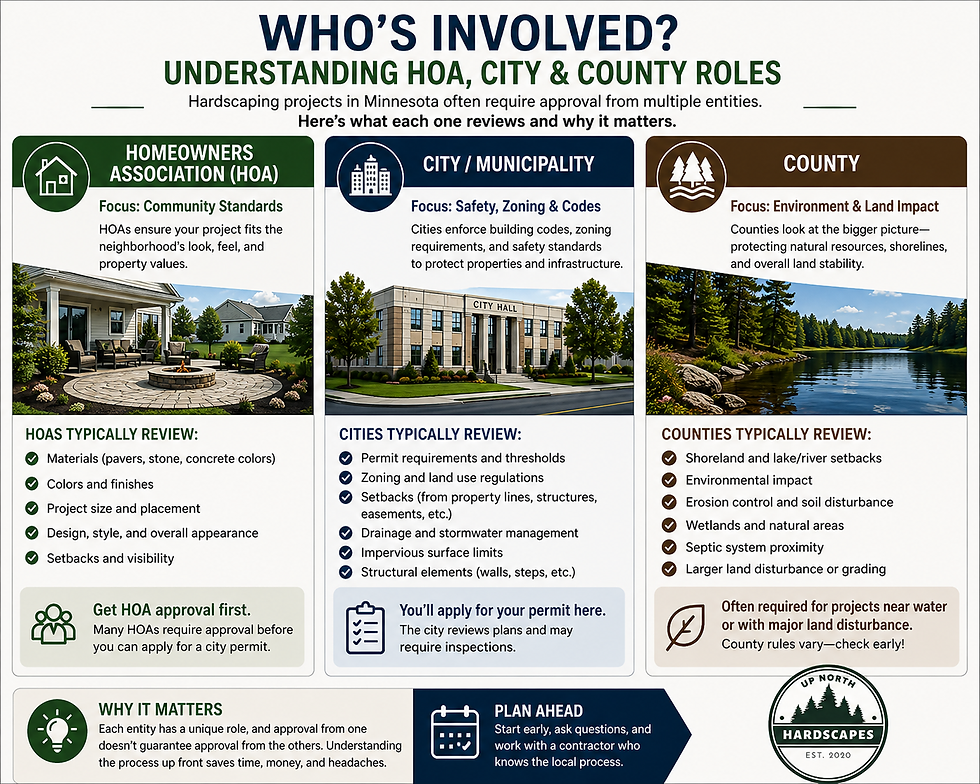
Permits aren't the only layer of approval homeowners need to think about. Depending on your location, multiple governing bodies can influence what you can and can't do.
Homeowners Associations (HOAs)
Often HOAs have their own set of rules that focus on aesthetics, materials, and overall property appearance. In many cases, HOA approval is required before you even apply for a city permit. Skipping this step can lead to costly corrections - even if your project meets all municipal codes.
City and County Regulations
Cities typically handle zoning, setbacks, drainage requirements, and structural considerations. This is where most permitting decisions are made for standard residential projects.
Counties usually step in when projects involve environmental impact, larger land disturbances, or shoreline properties. If your project affects water, soil stability, or protected land, county regulations are likely part of the equation.
Understanding how these layers interact is key. It's not uncommon for a project to require approval from more than one authority.
Why Working with a Contractor Matters
This is where a lot of homeowners either save themselves a headache - or create one.
An experienced contractor doesn't just build the project - they understand the local regulations, know what triggers permits, and plan accordingly from the start. That means designing patios and walls that manage water correctly, stay within code limits, and avoid unnecessary delays.
They also handle the logistics: submitting plans, pulling permits, and coordinating inspections. That alone can save homeowners hours of back and forth with local offices.
More importantly, they ensure the project is done right. Not just visually - but structurally and legally. A project that passes inspection and holds up over time is worth far more than one that cuts corners and creates problems later.
Tips for Navigating the Permit Process
If you're planning a hardscaping project, a little preparation goes a long way.
Start early: Especially during peak building season permit applications can take weeks to process. Waiting until the last minute can delay your entire project timeline.
Gather detailed plans: Include measurements, materials, and site location to help speed up the approval process and reduce confusion.
Consult local authorities: Contact your city or county building department for specific requirements. A quick conversation can clarify information and help you avoid costly mistakes.
Check HOA rules: Review your association’s guidelines before designing your project. It's much easier to adjust plans upfront than to redo a finished project.
Consider environmental impact: Especially for shoreline projects, be aware of regulations protecting water quality and habitats.
Build Smart, Not Twice
Hardscaping permits in Minnesota aren't just red tape - they exist to protect your property, your investment, and the environment around you.
Whether you're installing a patio, building a retaining wall, or improving your shoreline, understanding the rules upfront can save you time, money, and frustration. The difference between a smooth project and a stressful one often comes down to planning, compliance, and working with the right time.
At Up North Hardscapes, we help homeowners navigate every step of the process - from design to permits to final installation - so you can move forward with confidence knowing your project is built to last.


Comments